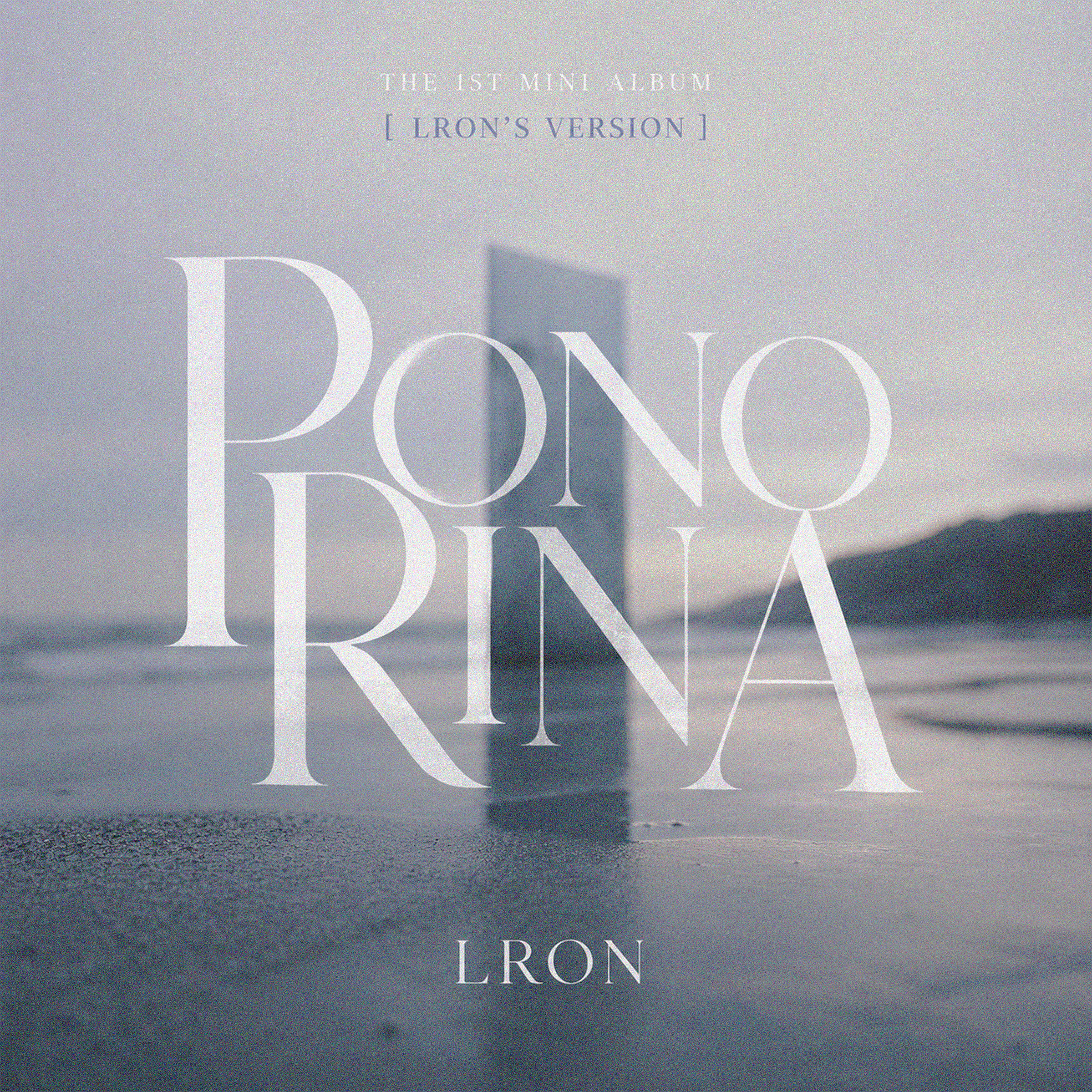
The story around PONORINA has always sounded too dramatic to be useful, which is exactly why the songs needed to return. Before LRON became a catalog force, before Beautiful Night turned his mood into infrastructure and before the deluxe editions began to treat the night as an expandable city, there was this first mini album: abrupt, bruised, melodically reckless, and then, according to the legend, pushed offline by an old company that could not control what it had accidentally helped create. PONORINA (LRON'S VERSION) arrives with the charge of a restoration and the voltage of a surprise attack. It is not only a re-recording. It is an artist walking back into the locked room where his name first became dangerous and changing the locks.
The comparison to Taylor Swift's re-recordings is obvious and useful, but it does not fully explain the emotional weather here. Swift's versions often frame ownership as a legal and archival correction, a way of relocating value from old masters into a new system. LRON's reclamation feels more volatile because PONORINA is not a mature blockbuster being polished for the estate. It is an origin document. It carries the awkward courage of an artist finding out that his instincts are larger than the room around him. Re-recording it risks sanding away the nervous texture that made the original feel like a flare. The achievement of LRON'S VERSION is that it keeps the nerves visible while making the ownership unmistakable.
The first six songs, previously released in another life, are not simply cleaned up. Overnight sounds less like a bedroom confession now and more like a thesis statement: the voice is steadier, the production wider, but the sense of being awake for the wrong reasons remains. PONORINA itself, still the album's strange little center of gravity, benefits from the new recording because LRON no longer has to overexplain its melodrama. He sings it as someone who knows the myth already survived. Bad Link sharpens the original's jagged humor, turning technological failure into emotional sabotage, while I am BACK! gains an almost cruel irony. A song that once sounded like a young artist insisting on his presence now sounds like evidence in a case he has already won.
Hate, Hate, Hate and Losing You are the emotional hinges. The former could have become cartoonish in a cleaner version, but LRON resists the temptation to make resentment glamorous. He keeps it petty, human, unflattering. The repetition lands not as villainy but as exhaustion, the mind chewing the same bitter word because it cannot find a nobler one. Losing You, by contrast, is devastating because the new vocal does not chase tears. It lets the melody stand up straight. The result is less fragile than the earlier version and somehow sadder, because the singer sounds like he has spent years learning how not to collapse.
Then come the vault tracks, and this is where PONORINA (LRON'S VERSION) becomes more than a restoration. pick someone's flowers is the obvious centerpiece, and it earns the position. As a lead from the vault, it understands the album's central contradiction: tenderness can be theft, performance can be apology, and a beautiful gesture can still arrive too late. The song's hook is almost alarmingly direct, but LRON shades it with enough doubt that it never becomes greeting-card pop. He does not ask whether the flowers will fix anything. He seems to know they will not. He picks them anyway.
Big Entertainment Right? is the album's sharpest piece of self-diagnosis. It looks at fame not as fantasy but as machinery, a system that asks pain to become legible, repeatable, and profitable. Coming after years of LRON's public scale, the track feels both old and newly cruel. drop dead is even less polite, a snarling little performance that refuses the tasteful language of survival. kink risks the most and occasionally lands unevenly, but its willingness to complicate desire gives the back half of the album a necessary dirtiness. mean a lot and next step close the vault sequence with less spectacle and more ache, as if the album understands that reclamation is not only about triumph. It is also about returning to the parts of yourself that were not yet fluent.
What makes the record extraordinary is the way it refuses to separate legal ownership from emotional ownership. The copyright context is not an accessory here. It is part of the listening experience. Every LRON'S VERSION tag carries a small act of correction, but the album never collapses into branding. Instead, the phrase becomes a ghost mark: proof that these songs have lived twice, proof that the second life is not a replica. You hear the artist claiming the masters, yes, but you also hear him claiming the embarrassment, the bravado, the bad decisions, the half-formed genius, the moments when the writing reached farther than the production could follow.
Compared with Beautiful Night, PONORINA is rougher and less architectural. Beautiful Night knows how to build a world; PONORINA knows how to survive one. That difference matters. The later album turns mood into skyline, while this one treats mood like weather coming through a broken window. The new version improves the sound without turning the window into a wall. Drums hit with more dimension, synths have more air, backing vocals are placed with greater care, but the album still feels slightly exposed. It should. A perfectly smooth PONORINA would be a betrayal.
LRON's scale can sometimes make criticism feel distorted. When an artist is treated like an institution, every release arrives with a fog of inevitability. PONORINA (LRON'S VERSION) cuts through that fog because it makes his institutionality feel earned in reverse. The album reminds listeners that the giant catalog started as something smaller and more desperate: a voice testing how much damage a melody could carry, a young artist turning restriction into pressure, a set of songs that were important before they were safe.
There are imperfections. A few vault tracks are more fascinating than flawless. The sequencing is almost too generous, and the album's second half occasionally crowds the brutal clarity of the original six. But those flaws feel connected to the project's purpose. This is not a museum restoration with invisible seams. It is a reclaimed house where the owner has decided to leave some cracks in the plaster because the cracks are part of the title deed.
PONORINA (LRON'S VERSION) is a copyright statement, but it is also a musical one: the past is not dead material, and ownership is not only a business arrangement. In LRON's hands, ownership becomes interpretation. He does not simply take the songs back. He listens to them as if they still have something to accuse him of. That is why the album feels alive, and why its return has the force of a second debut. The first PONORINA made LRON possible. This version makes the myth accountable.
Reader Comments
Log in to comment, reply, or like comments.